Information For Growers
Information for growers
We specialise in crucial topics for cotton growers: from water to weeds, and soil health to stewardship. Explore our topics here.

We specialise in crucial topics for cotton growers: from water to weeds, and soil health to stewardship. Explore our topics here.

1. Be prepared for increased pest activity, particularly aphids.
1. Keep an eye out for fall armyworm.
With fall armyworm (FAW) detections throughout Queensland and well into NSW, many agronomists are taking a closer look at the caterpillars they come across in different crops. Importantly, please note that FAW have not been detected in in any cotton crops (either Bollgard® 3 or unsprayed non-Bt cotton refuges) grown over the last 7 months in Northern Australia.
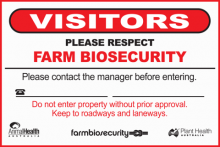
If it can move, it can carry pests, weeds and diseases. For this reason, it is important to communicate your biosecurity requirements to all people entering farms. Never assume people know the biosecurity measures you have in place for your farm.
There are a number of ways you can communicate your biosecurity requirements, including:
Recent research has looked at the impacts of early season water deficits on fruit production, fruit retention, boll distribution, seed and lint yield in high retention Bollgard ll variety Sicot 71BR cotton.
Experiments were conducted over two seasons (2006-07 and 2007-08) at the Gatton Campus of the University of Queensland. The research consisted of four experiments which had different planting dates, area, rainfall and irrigations after the stress period.
Roundup Ready® cotton has been grown in Australia since 2002 and since then glyphosate has become a firm favourite: a bit like your footy team, biscuit, or car.
Glyphosate is a once-in-a-generation herbicide - we are unlikely to see a more robust product with this longevity ever again.

Diseases can reduce yield, increase the cost of production and influence how growers and consultants manage their properties, with farming practices having a significant effect on the spread and severity of diseases present.
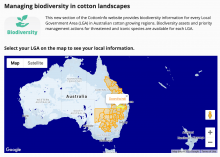
What do koalas, the Fitzroy river turtle and the southern bell frog have in common? They're just three of the iconic Australian species found on or near our cotton farms.

Coming off the back of drought, crop managers may have concerns that prolonged periods of fallow will cause a rise in the incidence of long fallow disorder.
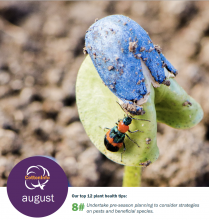
With the 2020-21 season approaching, now's the time to be undertaking preseason planning to reflect and consider strategies on how to manage pests and beneficials.